There is always one object in a collection that means just a little more than the others. The challenge is knowing...
Latest posts
-
 The Centrepiece of a Collection: How to Give It the Presence It DeservesRead more
 -
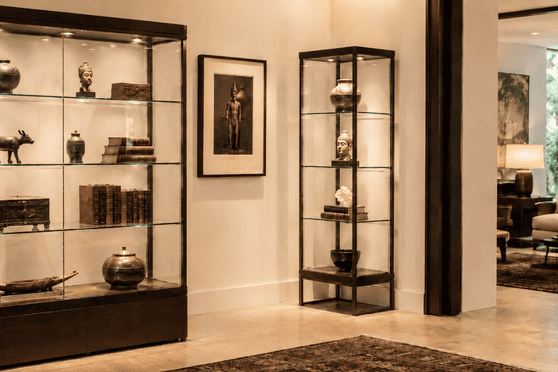 How to Create a True Collection Gallery at HomeRead more
A collection takes on an entirely new dimension when it stops being merely assembled and begins to be genuinely...
-
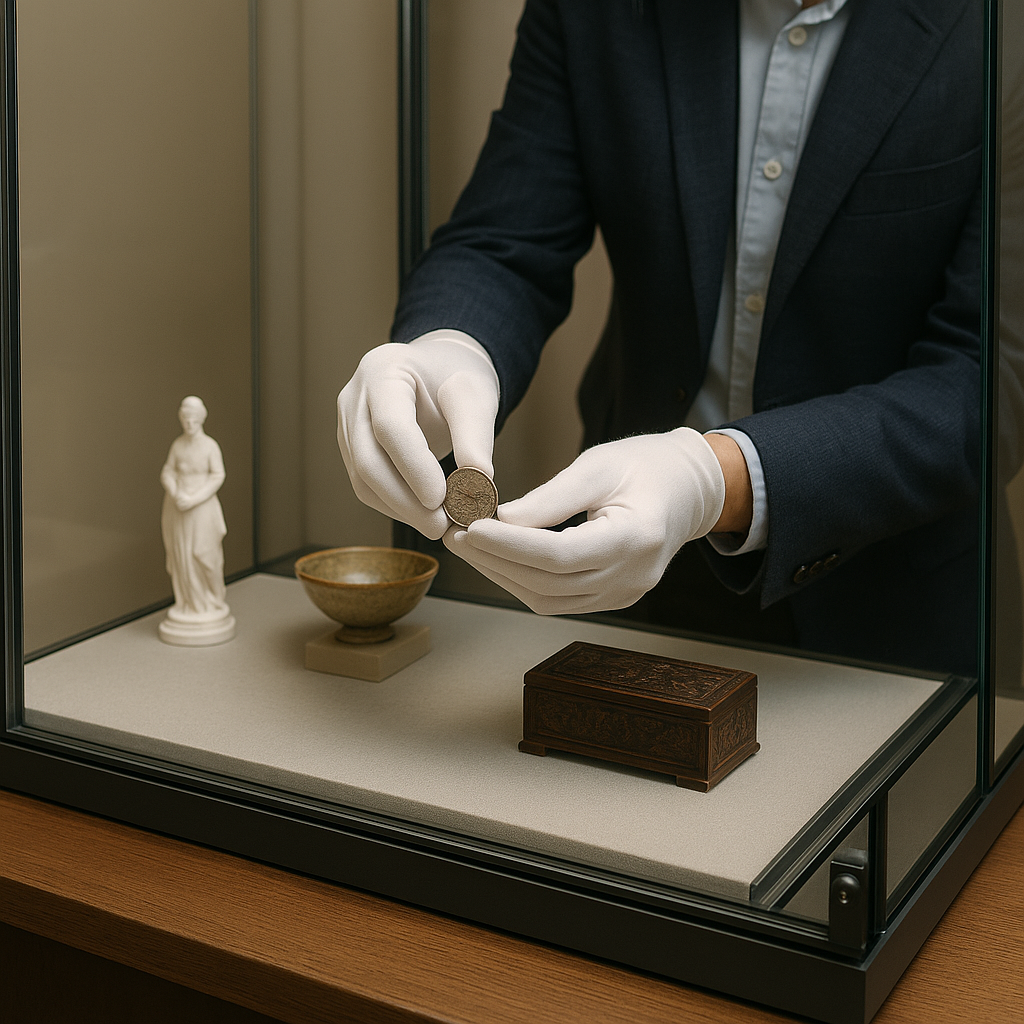 Mistakes to Avoid When Displaying Your CollectablesRead more
Displaying your collectables is a way of sharing your passion. However, presenting them poorly can quickly compromise...
-
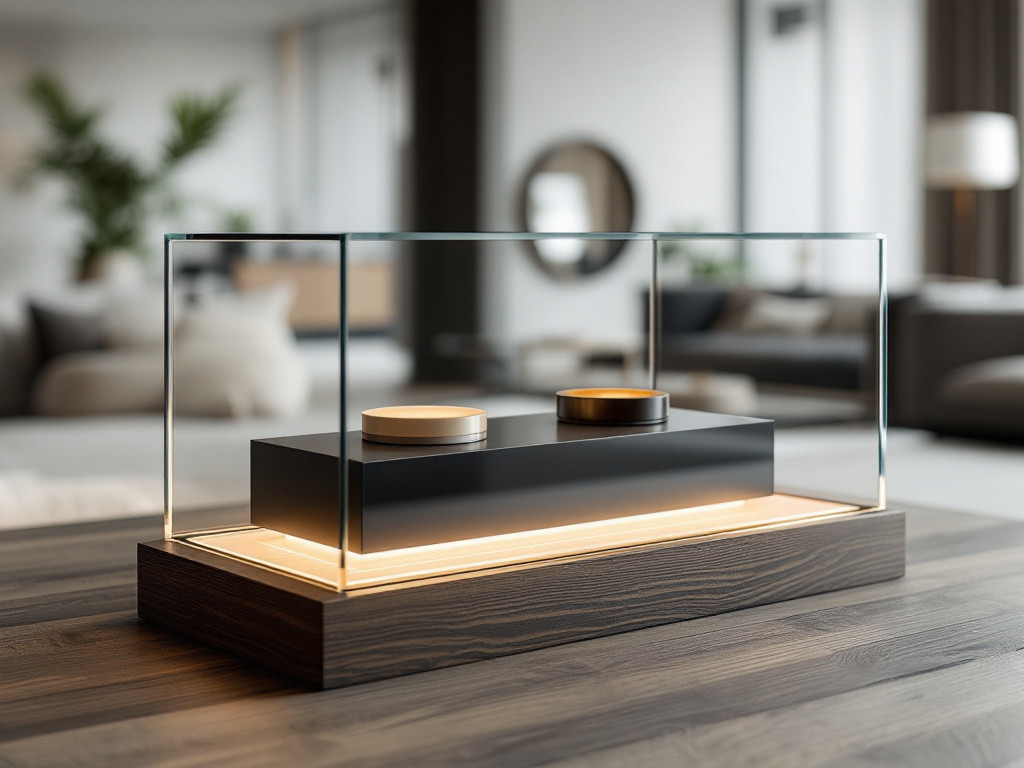 The Benefits of Plexiglas® for Preserving CollectablesRead more
Passionate collectors understand how essential it is to preserve both the value and appearance of their pieces....
-
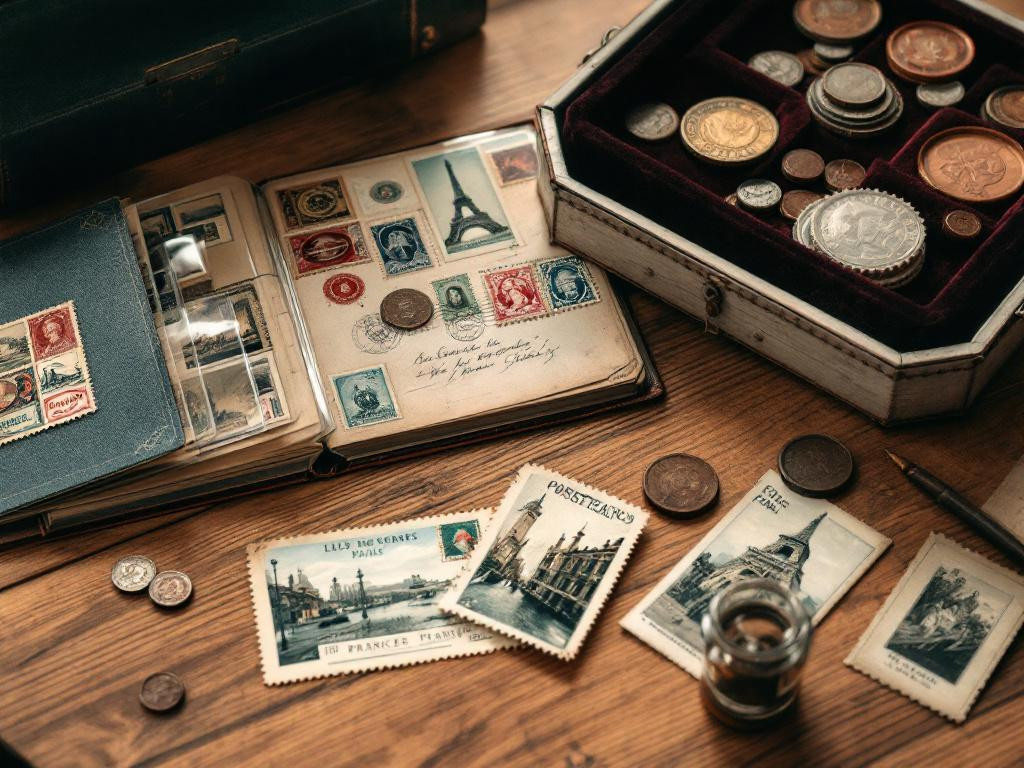 Collectibles around the world: passions by countryRead more
Stamps, figurines, jerseys, cards… Behind every collection, there is a story, a memory or a fascination. But did you...
-
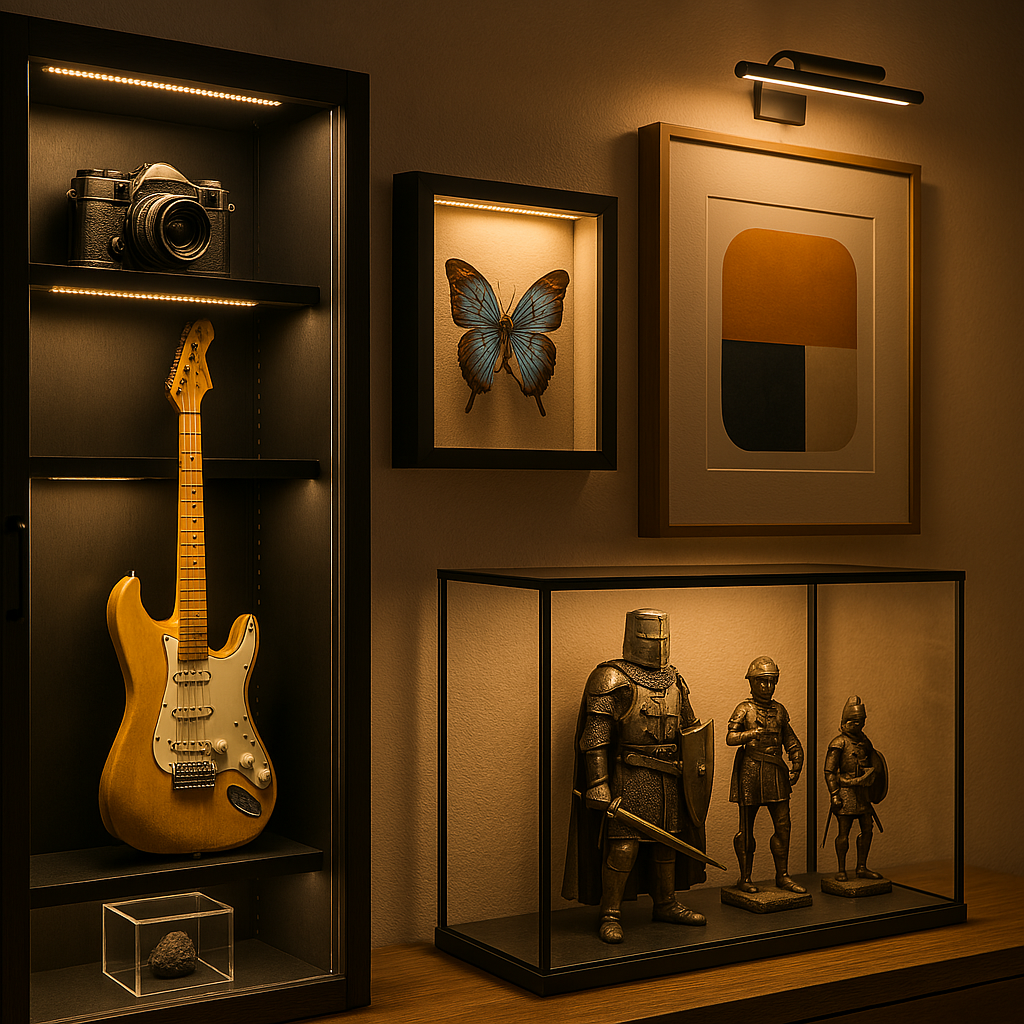 Choosing the ideal lighting to enhance and protect your collectibles.Read more
Collectibles are precious treasures that deserve special attention, and lighting plays a crucial role in their...
Blog categories
Search in blog
Archived posts

The Centrepiece of a Collection: How to Give It the Presence It Deserves
In almost every collection worthy of the name, there is one object that matters more than the others. A model acquired after years of searching, an antique book found through a fortunate sale, a piece of film memorabilia that holds an entire chapter of personal memory. This object does not need to be the rarest or the most expensive to hold such a special place: it simply carries something the others do not. Most of the time, the challenge is not recognising its importance. It is giving it, within the space it occupies, the presence it truly deserves. After all, even an exceptional piece can go unnoticed if nothing around it signals its significance.
Accepting that a collection can have a focal point
Many collectors, out of respect for each of their pieces, hesitate to establish an explicit visual hierarchy. The idea of highlighting one object over another can feel unfair to the rest of the collection. Yet displaying everything with the same intensity often creates the opposite effect to the one intended: with the eye drawn in every direction at once, it never truly settles anywhere. A collection that refuses any form of hierarchy eventually reads more like an inventory than a story.
Giving one piece a special place does nothing to diminish the value of the others. On the contrary, it gives structure to the whole, creating an anchor from which the collection begins to make sense. Museums rarely work differently: in a room containing several works, one of them is almost always designated, through its position, lighting or the space surrounding it, as the piece towards which the eye should naturally be drawn first. The rest of the display then helps to illuminate it, both literally and figuratively.
Empty space, an understated tool for highlighting a piece
Visually isolating an object often means doing the opposite of what instinct might suggest: rather than adding, you remove. Empty space around a piece acts like a silent frame. Without saying a word, it signals that this object deserves to be viewed on its own, without immediate competition. This principle, well known in art galleries, relies on a fairly simple mechanism: our attention is naturally drawn towards what stands apart from its background, and a backdrop crowded with other objects simply leaves no room for that distinction.
In a private collection, this might mean devoting almost an entire shelf to a single piece, while allowing the rest of the collection to be displayed more densely. This does not mean completely emptying a display case or creating an artificial sense of emptiness that would feel out of place in a lived-in interior. It is more a question of varying the density of the display according to the importance of each object, rather like adjusting the silence around a sentence you want people to remember.
Height and viewing angle
The position of an object within a space profoundly changes the way it is perceived, far more than we might instinctively imagine. In galleries and museums, the centre of a hung artwork is traditionally positioned at around one metre fifty to one metre sixty above the floor, a height intended to correspond to the eye level of a standing visitor without requiring them to look noticeably up or down. This guideline, refined through decades of exhibition design, also applies to three-dimensional objects: a piece positioned too low tends to be perceived simply as one object among others, whereas the same piece raised to eye level naturally asserts itself as a subject in its own right.
This choice obviously depends on how the room housing the collection is actually used. If armchairs or a sofa are nearby, it makes sense to adjust the height to take the seated viewing position into account, even if this means departing slightly from conventional museum standards. The essential question is where the piece will most often be viewed from, and its presentation should be designed around that specific viewpoint rather than an available position chosen simply for convenience.
Creating a hierarchy of light
Lighting a centrepiece is never simply a matter of brightness. In exhibition design, lighting generally serves several different functions: one type simply allows people to move around and see the space as a whole, another isolates a specific object to attract attention, while a more decorative form contributes to the overall atmosphere without serving an explicitly presentational purpose. It is the combination of these different layers that gives depth to a display, rather than a single spotlight aimed directly at the object.
What truly creates the highlighting effect is the contrast between the light falling on the piece and the light in its immediate surroundings. Too little contrast weakens the focus, while too much can become theatrical. Museum lighting professionals generally refer to ratios of around one to five or one to ten between the object and its surroundings, creating a balance that allows the piece to stand out clearly without turning the entire setting into a spectacle.
It is also worth resisting a common instinct: seeking the strongest possible light in order to make an object shine. Excessively intense lighting can flatten forms, diminish relief and, with certain materials, accelerate deterioration that remains invisible to the naked eye. Moderate accent lighting, carefully positioned, will reveal more of an object's texture, depth and grain than aggressive frontal illumination.
The background, reflections and what should remain discreet
The background behind a centrepiece plays a role that is often underestimated. A backdrop that is too busy, colourful or heavily textured competes with the object itself, even when the piece remains at the centre of the viewer's field of vision. By contrast, a neutral background whose tone has been chosen to complement the colours and materials of the displayed piece acts as a visual pause, leaving space for what really matters.
Reflections deserve just as much attention, particularly when an object is protected behind glass. Glazing that is poorly positioned in relation to surrounding light sources can produce reflections that interfere with the view of the piece, sometimes making it almost invisible from certain angles. Carefully designed display cases generally incorporate low-reflection glass and are positioned so that natural light within the room does not compete with the lighting intended to highlight the object. It may seem like a technical detail, but it has a very real effect on the way a visitor, or simply a guest, perceives the piece when approaching it.
Protecting without overwhelming
Highlighting an important piece also means taking its fragility into account. Light, and ultraviolet radiation in particular, causes damage that accumulates gradually and can never be completely reversed once it has occurred. Textiles, antique paper, leather and certain pigments can lose their vibrancy irreversibly after prolonged exposure, even under relatively modest levels of illumination. This well-documented reality in heritage conservation explains why the most sensitive objects are often displayed under deliberately low light levels or rotated rather than kept on permanent display.
Ambient humidity plays an equally important role, even if its effects are less immediately visible. Organic materials react to changes in humidity by expanding and contracting slightly, and repeated movement over time can weaken their structure or cause cracking. Preventive conservation recommendations generally favour stable relative humidity, most often maintained at around 45 to 55%, with limited day-to-day fluctuations rather than sudden changes.
A well-designed display case therefore does far more than simply provide an attractive setting for an object: it helps filter UV radiation, stabilise the local environment around the piece and protect it from dust and repeated handling. At Cœur de Collection, this requirement takes on its full meaning: every premium display case made in France is conceived not merely as a decorative accessory, but as an integral part of the presentation itself, designed to serve the object it protects.
Display and theatricality: a line not to cross
There is a fine line between highlighting a piece and turning it into a spectacle. Lighting that is too dramatic, an overly imposing plinth or an excessively elaborate setting ultimately draws attention to the display itself rather than to the object it is meant to serve. A successful presentation generally fades into the background: the visitor, or guest, should feel as though they are discovering the piece, not the staging surrounding it.
This restraint also has the advantage of ageing better. Dramatic effects, extreme contrasts and coloured lighting often reflect the fashion of a particular moment, whereas a presentation based on simple principles, a clear hierarchy, controlled spacing and appropriate lighting, can remain timeless for years. This is especially true of a centrepiece intended to hold this position for a long time: it deserves a setting designed to endure, rather than one intended to impress only once.
What a successful presentation ultimately reveals
Giving a collection's centrepiece the presence it deserves is therefore not the result of one single decision, but of a series of modest choices made consistently: where to place it, at what height, how much space to leave around it, what lighting to use, what background to choose and under what conditions to protect it. None of these decisions is spectacular in isolation. Together, however, they transform a beautiful object into a visual and emotional focal point within an interior.
Behind this attention to detail lies something that goes beyond aesthetics alone. A piece that took years to find, that recalls a particular encounter or carries a personal story deserves to be viewed with the same care that went into acquiring it. This is precisely the ambition behind a display case designed as a showcase: not simply to store an object, but to give it the conditions in which it can finally be seen as it deserves to be seen, today and for years to come.
Posted in:
Display Cabinet Tips
Related posts
-
Choosing the ideal lighting to enhance and protect your collectibles.
Collectibles are precious treasures that deserve special attention, and lighting plays a crucial role in their...Read more
-
Collectibles around the world: passions by country
Stamps, figurines, jerseys, cards… Behind every collection, there is a story, a memory or a fascination. But did you...Read more
-
The Benefits of Plexiglas® for Preserving Collectables
Passionate collectors understand how essential it is to preserve both the value and appearance of their pieces....Read more
-
Mistakes to Avoid When Displaying Your Collectables
Displaying your collectables is a way of sharing your passion. However, presenting them poorly can quickly compromise...Read more
-
How to Create a True Collection Gallery at Home
A collection takes on an entirely new dimension when it stops being merely assembled and begins to be genuinely...Read more
Leave a comment